
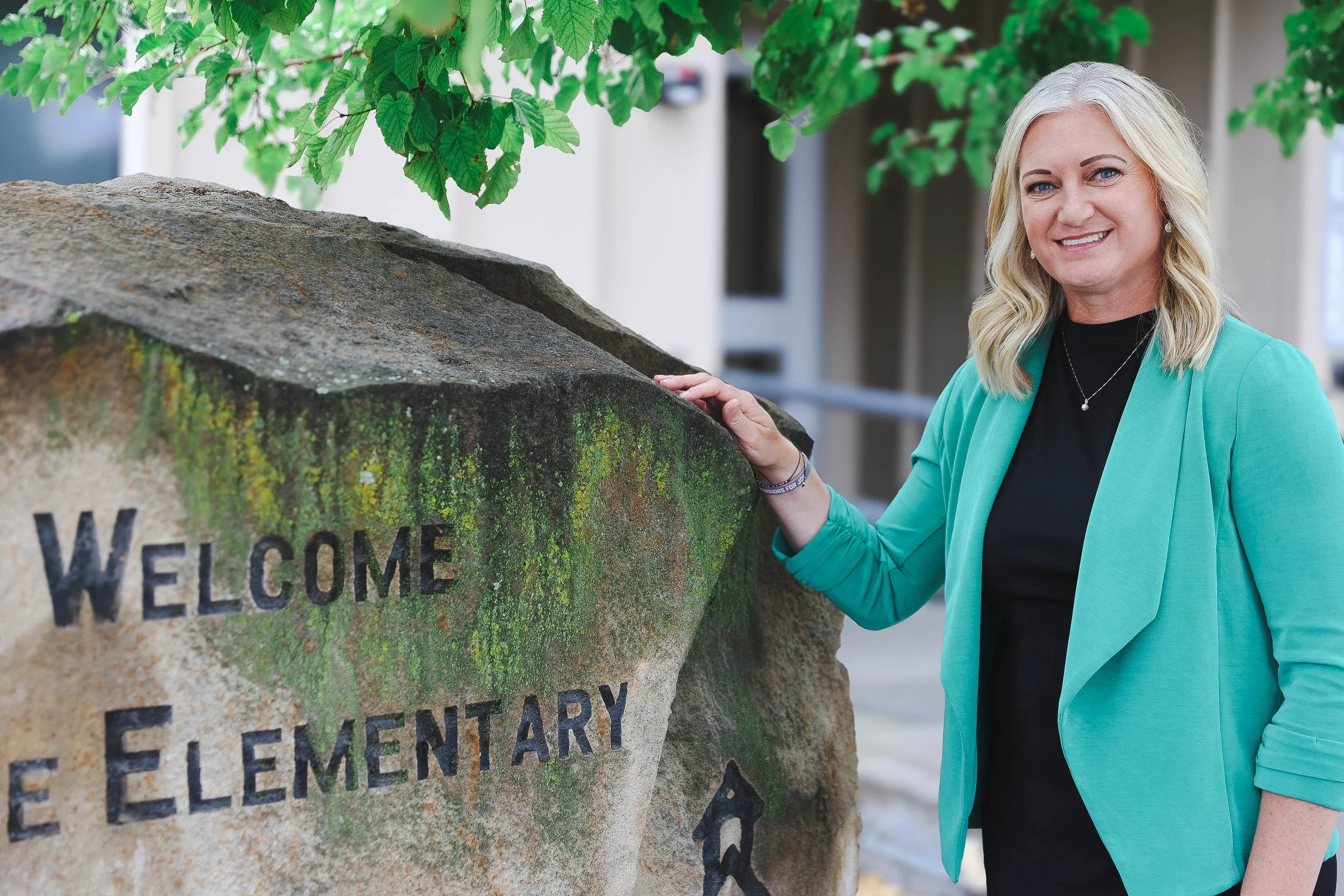
Alisha McBride, superintendent of the Vale School District (Angie Sillonis)
The Truancy Mutiny
The Oregon Legislature banned truancy citations. But Oregon’s poorest county brought them back and now posts the state’s best attendance numbers, offering lessons for the coming school year.
By James Neff
July 21, 2026
In 2021, Oregon lawmakers banned the use of fines as a last resort to get students to attend school.
Malheur County said no to the ban and brought back truancy citations with a local ordinance.
The county now has the best attendance of any Oregon county.
Malheur County is about as far from the state’s centers of power as you can get and still be in Oregon. From Salem, it’s a 375-mile drive that crosses the Cascade Mountains and sweeping sagebrush and ends in a different time zone. Malheur’s residents are the poorest and least educated in Oregon.
Yet an OJP analysis of 2025–26 attendance data reveals that Malheur County’s kids show up to class more than those in any other county in Oregon—by far.
In a state plagued with the second-worst school attendance in America (ahead of only Alaska), Malheur’s 6,000 students attend school at higher rates than in Portland, Eugene, Salem, and even Riverdale, Oregon’s wealthiest school district.
How Malheur school districts pushed their attendance rate nearly 20 points above the state average offers lessons for a state where one-third of students are “chronically absent”—defined as missing more than 10% of school days for any reason.
But there’s a complication. A tool that Malheur school districts relied on as a last resort to keep kids in school was scrapped by lawmakers in 2021.
School officials were barred from issuing truancy citations to a parent whose child is chronically absent.
After seeing chronic absenteeism soar in the 2021–22 school year (the first year back after COVID-19), local educators persuaded Malheur County to buck the state and pass an ordinance giving them back citation power. In 2023, it became the first county in Oregon to do so.
Since then, its attendance has climbed. “The trajectory of improvement in Malheur County is much greater than the rest of the state,” said Superintendent Alisha McBride of the Vale School District. “I believe that the ordinance makes a difference in attendance.”
The evidence is telling. Two other counties have since passed similar ordinances, and have also seen attendance improve. Lake County and others are considering it.
Experts say no single remedy will solve chronic absenteeism, which can be driven by problems with logistics, health, school culture, and parental support. Even so, the state’s education leaders—the Department of Education, the governor, the teachers union and most of the Legislature—have expressed little interest in bringing back citations. In fact, a 2025 legislative effort to reinstitute them failed to get out of committee.
“Oregon continues to think, well, what we need to do is just remove the accountability and everyone will just come in line—and that’s not the way the world is going,” said state Sen. Janeen Sollman (D-Hillsboro), a member of the Senate Education Committee whose son and daughter-in-law are schoolteachers. “There needs to be accountability.”
If students are not in school, they are not learning. As OJP has outlined in its series Oregon Schools: What Went Wrong, the state’s dismal attendance rate matches its achievement scores, adjusted for student demographics: 50th in fourth grade reading, 49th in the nation in eighth grade math.
Contributing to this crisis, as the series shows, Oregon officials dismantled academic accountability for proficiency tests and knowledge required to get a high school diploma. State universities have failed for years to properly instruct aspiring teachers how to teach reading. And the powerful teachers union killed a bill trying to reform Oregon’s regressive education funding by sending more money to needier districts.
The need for change is urgent, Sollman said. “Our education system in the state of Oregon is in a state of emergency. We should be all hands on deck.…This is where you need strong, vocal leadership from the governor.”
“The trajectory of improvement in Malheur County is much greater than the rest of the state,” said Superintendent Alisha McBride of the Vale School District. “I believe that the ordinance makes a difference in attendance.”
Caught by Surprise
The county seat of Malheur is Vale, population 2,000. Located 12 miles west of the Idaho border, the Vale School District has 865 students and, according to OJP’s analysis, enjoys an attendance rate other districts dream of—83%. That’s 18.5 points above the state average.
The start of its attendance recovery began in the 2021–22 school year, when McBride, the Vale superintendent, received an email from a local court official that floored her:
School districts across the state could no longer issue citations to parents for truancy violations.
This change occurred because, a few months earlier, lawmakers from both parties passed Senate Bill 817. Coming in the wake of George Floyd Jr.’s murder in Minneapolis, the bill wiped out juvenile justice fines, costs for court-assigned lawyers, probation fees, and other “aggressive and racially discriminatory fees,” according to the advocacy group Our Children Oregon.
But the bill also eliminated using the court system to enforce attendance laws, specifically the use of citations and fines. In doing so, according to a recent survey by Attendance Works, Oregon became one of only two states with this specific prohibition.
McBride and other superintendents thought the change was crazy. “[Now] there wasn’t a lever to say, no, you must send your child to school,” McBride said.
McBride, 45, like her husband, is a third-generation Vale High School graduate. The couple, who have four sons, run a cattle ranch in the district. She knows her community.
Oregon’s school attendance was in crisis long before COVID-19, but the pandemic caused huge academic disruptions. Still, McBride also believed not having citation power contributed to truancy’s steep rise across Malheur County. By the end of the 2021–22 school year, Vale’s rate of regular attendance fell from 83% to 70%. Statewide, Oregon school districts fared worse—dropping from 72% to 64%.
More than a decade ago, Oregon and most other states shifted their approach to attendance, moving from punitive methods, such as citations as a first resort, to addressing barriers to attendance like transportation, undiagnosed disabilities and bullying, and even provided alarm clocks. Citations remained a last resort.
McBride and her team used phone calls, letters and home visits, as well as referrals to health care and child care support, in order to promote attendance. But if families didn’t engage, McBride said, she could issue a Class C citation, (comparable to a speeding ticket) to parents who failed to get their children to school. The citation, which required parents to appear before a judge and carried a possible $500 fine, often did the trick.
But post-George Floyd, the lever was no longer available.
Citations as a Last Resort
McBride and fellow educators disagreed that all carrot and no stick is an effective strategy. By early 2023, the superintendents of Malheur County’s 10 districts and leaders of its five cities (Ontario, Vale, Nyssa, Adrian and Jordan Valley) had persuaded the county commission to pass a citation ordinance.
Since then, in a county with Oregon’s highest rate of people with less than a ninth grade education, attendance rates have climbed steadily.
Attendance improved among all student groups in the Vale district, with rates among homeless students, students of color, and low-income students jumping by double digits. Early, persistent prevention work and support played a key role, McBride said, and the prospect of citations held families accountable.
When citations are issued and families come to Malheur County’s truancy court, the judge brings them together with school officials and social service providers. The judge can require “wraparound” services, anything from parenting classes to mental health referrals. There is at least one follow-up hearing. The $500 fine hangs in the background but is dismissed if all goes to plan.
Families know they can be cited, McBride said, but Malheur school districts rarely need to insist on it. “There are so many conversations and meetings and attempts to remove barriers that occur prior to a conversation about a citation,” she said.
This past school year, Malheur County superintendents issued 47 citations for their more than 1,000 chronically absent students (out of a student population of 6,000), and only one fine.
“The trajectory of improvement in Malheur County is much greater than the rest of the state,” McBride said. “I believe that the [citation] ordinance makes a difference in attendance.”
Two other rural Eastern Oregon counties, Union and Umatilla, have since passed similar ordinances. Their attendance rates have increased twice as much as the state’s improvement, according to an OJP analysis of data obtained exclusively for the past three school years.
Longtime Umatilla School District Superintendent Heidi Sipe, who is active nationally on attendance solutions, thought lawmakers erred when they removed truancy citations.
“As is the case with much of lawmaking, there’s a knee-jerk reaction,” she said. “Instead of addressing a challenge with the places where it’s actually a problem, they apply these universal, blanket solutions and end up with some real unintended consequences.”
Sipe mentioned a recent case of a woman with a teenage son who was chronically absent. “They wouldn’t respond to the letters, they wouldn’t come to the meetings, they wouldn’t accept the help because there was no incentive for them to do so,” she said. Sipe told the mother the next step in the process was a citation and possible fine.
The woman came to a school meeting, angry. But she cooled down and accepted help, and she and her son agreed to an attendance plan. Sipe said the woman sent her a “thank you” text a week later, apologizing and saying her boy hadn’t missed school since.
“That’s a sweet story,” Sipe said, “but if the threat of the fine weren’t there, I pretty much guarantee you that Mom wouldn’t have gone to that meeting.”
“Oregon continues to think, well, what we need to do is just remove the accountability and everyone will just come in line—and that’s not the way the world is going,” said state Sen. Janeen Sollman (D-Hillsboro).
Powerful Pushback
Despite McBride and Sipe’s belief that citations can have a positive effect on attendance, many of the state’s leaders are skeptical.
The Oregon Department of Education does not support bringing back citations. Rather, a spokesperson said, the agency “emphasizes prevention, early intervention, and addressing the root causes of absenteeism.”
Also opposed to parental citations is Senate Education Committee chair Lew Frederick (D-Portland). Frederick, who has two high schools in his district with rates of chronic absence higher than 50%, says citations won’t work in bigger districts.
“They’re all small districts, small towns,” he said of Vale and other rural districts. “That does not scale up to what goes on in a place like Eugene or Portland or Beaverton….People in smaller communities know each other and know the rules.”
“I’m not convinced that punishing or showing some sort of threat is the best way,” Frederick said.
The Oregon Education Association, the statewide teachers union, supported banning citations. “For too long, attendance penalties and truancy were punitive actions against students and their families,” OEA spokesman Efren Zamudio wrote in an email. “It also disproportionately impacted students of color.”
Gov. Tina Kotek, who is state Superintendent of Public Instruction, declined through a spokesperson to say specifically whether she supported citations.
Lawmakers from both parties, however, said they want a way to hold parents and students to account.
“Oregon’s chronic absenteeism crisis demands that we reevaluate every available tool,” Sen. Christine Drazan (R-Canby), the Republican nominee for governor, said in an email. “When schools have exhausted every other intervention, parental citations should be available as a last resort.”
One of the most determined voices supporting citations is Sollman, the state senator from Hillsboro.
“We heard in committee from districts, most of them rural, that are actually showing improvement in attendance because of that tool,” said Sollman, who also served two terms on the Hillsboro School Board.
“And what’s so bizarre is now ODE is saying, ‘Nope, you really can’t use that.’…That is taking away a critical tool that is working.”
We are researching Oregon’s growing use of remote learning through online public charter schools and distance learning schools. We rely on readers like you to help us do our jobs.
If you are a parent, student, teacher, taxpayer, former or current employee or owner, please share your experiences by using this confidential online form. Thank you.