

The Oregon Education Association Is Mighty—but Slipping
A loss in court and poor educational outcomes have weakened the union’s standing. It has responded with strikes and primary challenges to Democratic incumbents.
By Nigel Jaquiss
April 20, 2026
As the May 19 primary approaches, the Oregon Education Association is flexing.
With more than 40,000 members who live and work in nearly every community in Oregon, the teachers union is a powerful political force armed with a healthy checkbook.
Other unions also boast large memberships and lots of money. But historically, OEA has enjoyed a special status because of the unique role teachers play in the lives of children.
OEA has leveraged that bond in contract negotiations across Oregon’s 197 school districts and in Salem, where the union plays a key role in helping Democrats win supermajorities and control every statewide office.
But this spring, the dynamic has shifted: OEA is angry at some leading Democrats who want to change the status quo. The union considers it a betrayal.
Like any union, of course, OEA exists to advocate for its members, by seeking higher compensation and better working conditions. Its power peaked in 2019, when the Oregon Legislature passed the Student Success Act, the largest tax increase in Oregon history. It now generates $1.5 billion a year from a tax on corporations—all for education.
Six years after the cash started flowing, however, the relationship between Oregon families and schools has soured. Just 37% of Oregonians are “very satisfied” with their child’s school, the second-worst percentage in the nation, according to a February survey.
That is because outcomes in Oregon classrooms have worsened despite the funding increase. As OJP has reported in its ongoing series “Oregon Schools: What Went Wrong,” the state’s fourth grade reading scores, to cite just one example, are now, adjusted for demographics, the lowest in the nation.
“The places where you want Oregon to be at the top, we’re at the bottom and vice-versa,” says DHM Research pollster John Horvick. “It’s pretty depressing.”
Despite this systemic failure, critics say OEA has focused increasingly on policies that protect its members but do little to improve student outcomes. The union has opposed successful strategies used in Mississippi and other states that have boosted reading scores, including a statewide reading curriculum based on the “science of reading”; mandatory standardized testing that measures student growth; and funding targeted at the neediest schools rather than just by student head count.
“Who’s responsible for the lack of performance in schools? They are, not us.” - Sen. Mark Meek
Last year, OEA backed a new law that makes Oregon the only state to allow striking public employees, including teachers, to collect unemployment pay. (In 37 states, teachers cannot legally strike.)
Then, during the recent February legislative session, OEA killed an education spending bill to reform how Oregon distributes education funding by sending more money to needier districts. The union now seeks to unseat a Democratic legislator who co-sponsored it and also voted against the strike-pay bill.
OEA executive director Tracey-Ann Nelson rejects the premise that her union puts teachers before students. “We are extremely concerned as educators about student outcomes,” Nelson says. “We’re not opposed to accountability.”
In Nelson’s telling, the problem OEA is confronting is that lawmakers push for policy—like the February reform bill—without consulting the union. “We believe you should do things with us and not to us,” Nelson says.
OEA is one of the most important yet least scrutinized special interests in the state—and the key player when it comes to Oregon students and the single largest line item in the state’s budget. For the past several weeks, OJP has conducted interviews with educators, policymakers and other stakeholders and analyzed previously unreported OEA documents. That reporting reveals a portrait of an organization that has grown more aggressive at the same time it faces unprecedented financial and membership headwinds.
Nelson acknowledges that OEA is raising its voice and showcasing its strength as never before: “It’s a new level of activism.”
State Sen. Mark Meek (D-Gladstone) is one of the few Democrats willing to criticize OEA publicly. He makes a distinction between individual teachers and the union, which he says always wants more money and less accountability.
“We as a legislative body have done everything we can for schools,” Meek says. “Who’s responsible for the lack of performance in schools? They are, not us.”
Andy Saultz, dean of the graduate school of education at Lewis & Clark College, says Oregon faces a reckoning: “We’ve seen large investments in schools that have not been met with increases in achievement.”

Andy Saultz (Courtesy of Lewis & Clark College)
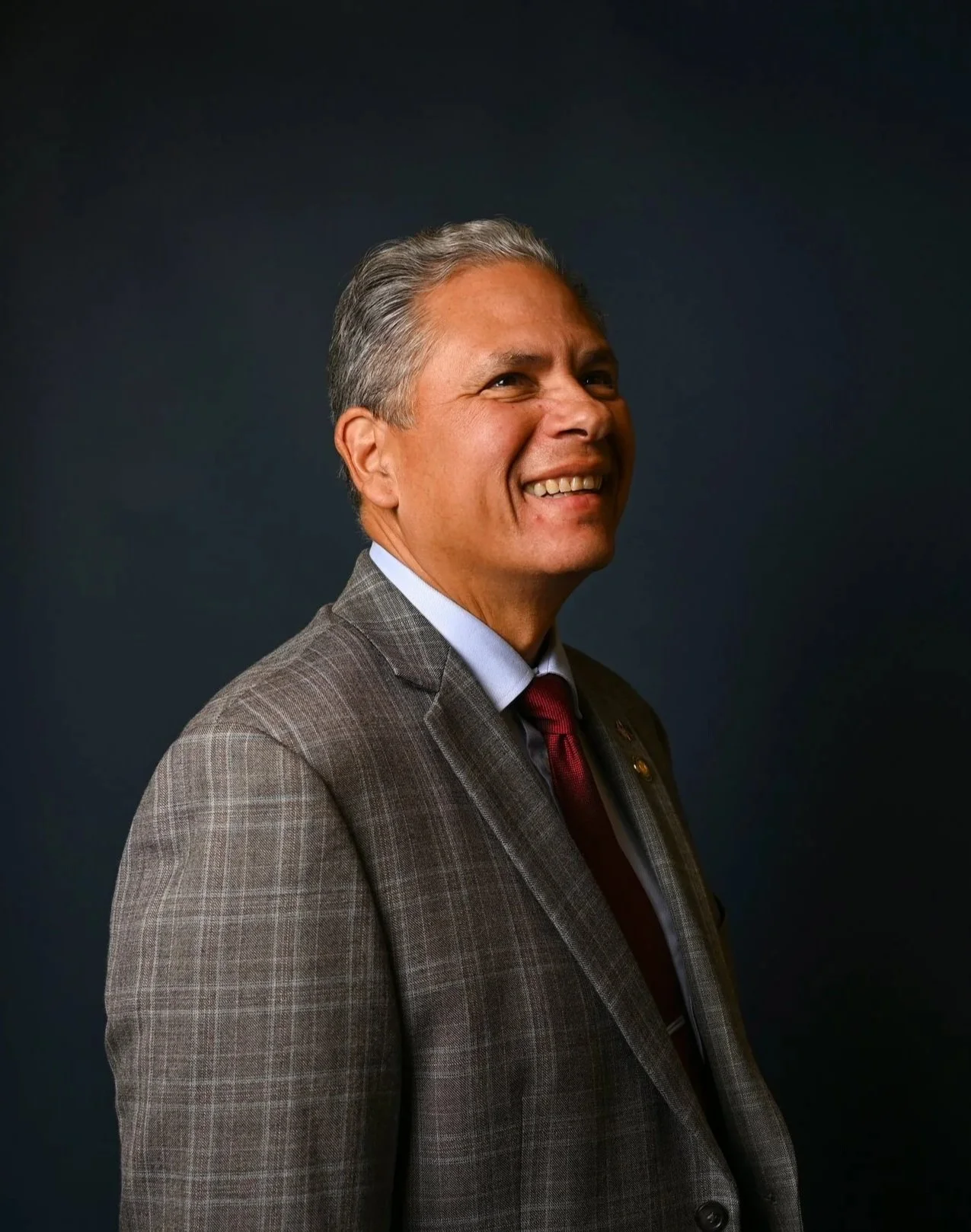
Sen. Mark Meek (Mick Hangland-Skill)
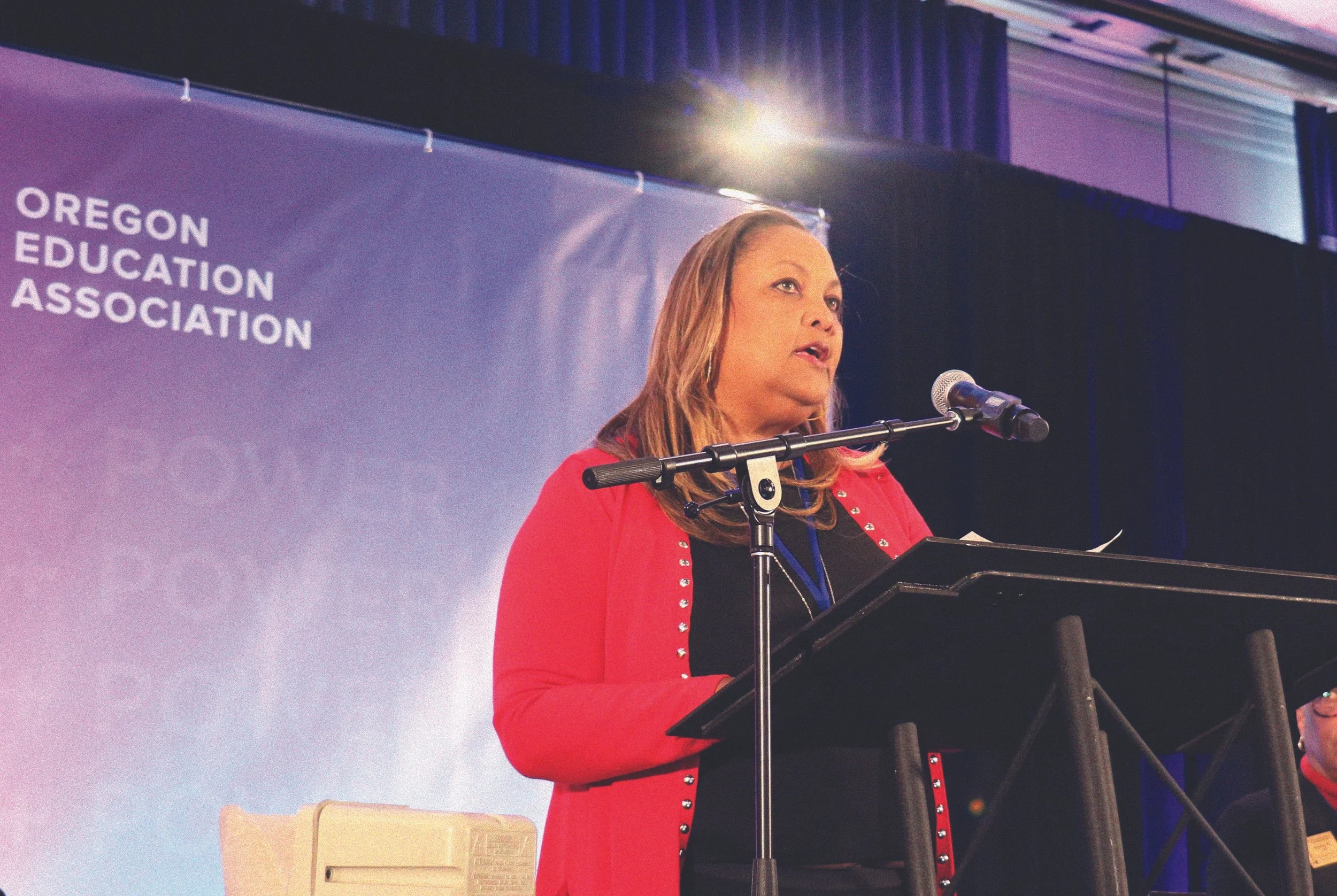
Tracey-Ann Nelson (Courtesy of Oregon Education Association)
Events in Salem on Feb. 10 revealed a lot about how the Oregon Education Association operates.On the Senate Education Committee agenda that day: Senate Bill 1555, which called for a reexamination of a 25-year-old funding tool called the Quality Education Model.
In 2025, the Legislature released an independent review of the QEM that concluded the model was archaic and neglected the state’s neediest students. Former state Sen. Michael Dembrow (D-Portland), historically an OEA supporter, testified on behalf of the bill, saying it would “allow us to make the case for investments that will really make a difference for our kids.” (The Legislature appropriated $11.4 billion for schools in the 2025–2027 budget.)
Two Democrats sponsored SB 1555: state Rep. Ricki Ruiz (D-Gresham) and his co-chair of the Ways and Means Subcommittee on Education, state Sen. Janeen Sollman (D-Hillsboro).
Sollman, a former Hillsboro School Board member who counts two teachers and a union member in her immediate family, said the need for reform was urgent. “I don’t think what we are doing is working,” she told her colleagues on the Senate Education Committee.
But Emily McLain, OEA’s lead lobbyist, shut down calls for reform—or, in this case, simply studying the model further.
“A short legislative session is not the venue for a wholesale reimagining of how Oregon meets its constitutional duty to fund schools,” McLain told the committee.
McLain spoke with confidence. She’s the daughter of six-term incumbent Rep. Susan McLain (D-Hillsboro), a retired teacher and a member of the Ways and Means Subcommittee on Education. More important, perhaps, the lawmaker who could decide SB 1555’s fate, Senate Education Committee chairman Lew Frederick (D-Portland), is a longtime OEA ally.
Indeed, Frederick backed the union and killed the bill. The decision frustrated Sollman. “Nothing is more urgent than our kids’ success,” she said. “We are failing those students.”
OEA’s political strength dates to 1973, when the Legislature passed the Public Employee Collective Bargaining Act, which gave Oregon’s public employee unions the right to negotiate binding contracts. (OEA is the state’s second-largest public employee union, smaller than Service Employees International Union but larger than the American Federation of State, Municipal and County Employees. The three often work in concert.)
OEA’s role expanded after 1990, when voters shifted responsibility for school funding from local jurisdictions to the state Legislature, making the Capitol a single point of leverage.
“OEA was really the gorilla in the room,” says Chuck Bennett, a retired lobbyist for the Coalition of Oregon School Administrators. “They had tens of thousands of members, most of them well-informed, influential people in their communities. And they had the most money—that was the perception.”
OEA used its resources to help Democrats win enduring control of the Legislature—first the Senate in 2005, then the House in 2007.
Although many donors contribute to individual candidates, OEA sends most of its legislative contributions to caucus leaders, who distribute the cash to candidates in tight races. That ensures maximum influence with leaders, who in turn decide which bills get hearings and who gets committee chairmanships. (A 2012 study by the Fordham Institute ranked OEA the second-most powerful teachers union in the country—only the Illinois teachers union ranked higher.)
In addition to large and steady contributions, OEA also developed a reputation for punishing Democrats who failed to fall in line, as Sollman is now learning. One infamous example still echoes nearly two decades later.
In 2008, state Rep. Greg Macpherson (D-Lake Oswego) ran for Oregon attorney general. Macpherson had overseen legislation aimed at cutting public employee pensions. OEA and its union allies mobilized behind political newcomer John Kroger, ending Macpherson’s political career.
Macpherson says the loss still hurts. “In 2003, Oregon’s public pension system was at risk of collapse. As a legislator with knowledge about pensions, I had a duty to fix the problem,” he says. “The groups that retaliated years later were misguided because the 2003 Public Employees Retirement System reforms stabilized the system for their members.”
“It has now changed to this mentality that it’s either our way or the highway. But I will not be intimidated. I won’t be told how to vote.” - Sen. Janeen Sollman
Killing a bill is one thing. Going after its supporters is another. That same day, Myrna Muñoz, an Oregon Department of Education employee whose sisters are both OEA employees, formed a political action committee to challenge Sollman in the May Democratic primary (OEA gave Muñoz $10,000, her second-largest contribution so far). Sollman had already incurred the wrath of OEA and its public employee union allies by voting against the 2025 bill that allows striking workers to collect unemployment pay.
OEA’s Nelson says Sollman deserves an opponent. “Frustration with Sen. Sollman has bubbled up out of concerns for her lack of engagement in the community,” Nelson says. “I don’t just mean OEA members, I mean the people who live in her community.”
Muñoz, a career educator, says Sollman is misguided. “The system needs transformation, but not the way she’s trying to do it,” she says.
Sollman says she thought she’d had a good relationship with OEA since entering the Legislature in 2017. “It has now changed to this mentality that it’s either our way or the highway,” she says. “But I will not be intimidated. I won’t be told how to vote.”
State Rep. Emily McIntire (R-Eagle Point), a member of the Eagle Point School Board and the House Education Committee, says it’s common knowledge in Salem that OEA gets the last word on any education bill.
“They have significant power,” McIntire says. “Any time there is an ed bill and I’m trying to work it, the first question that comes from Democrats is, have you talked to OEA about that?”
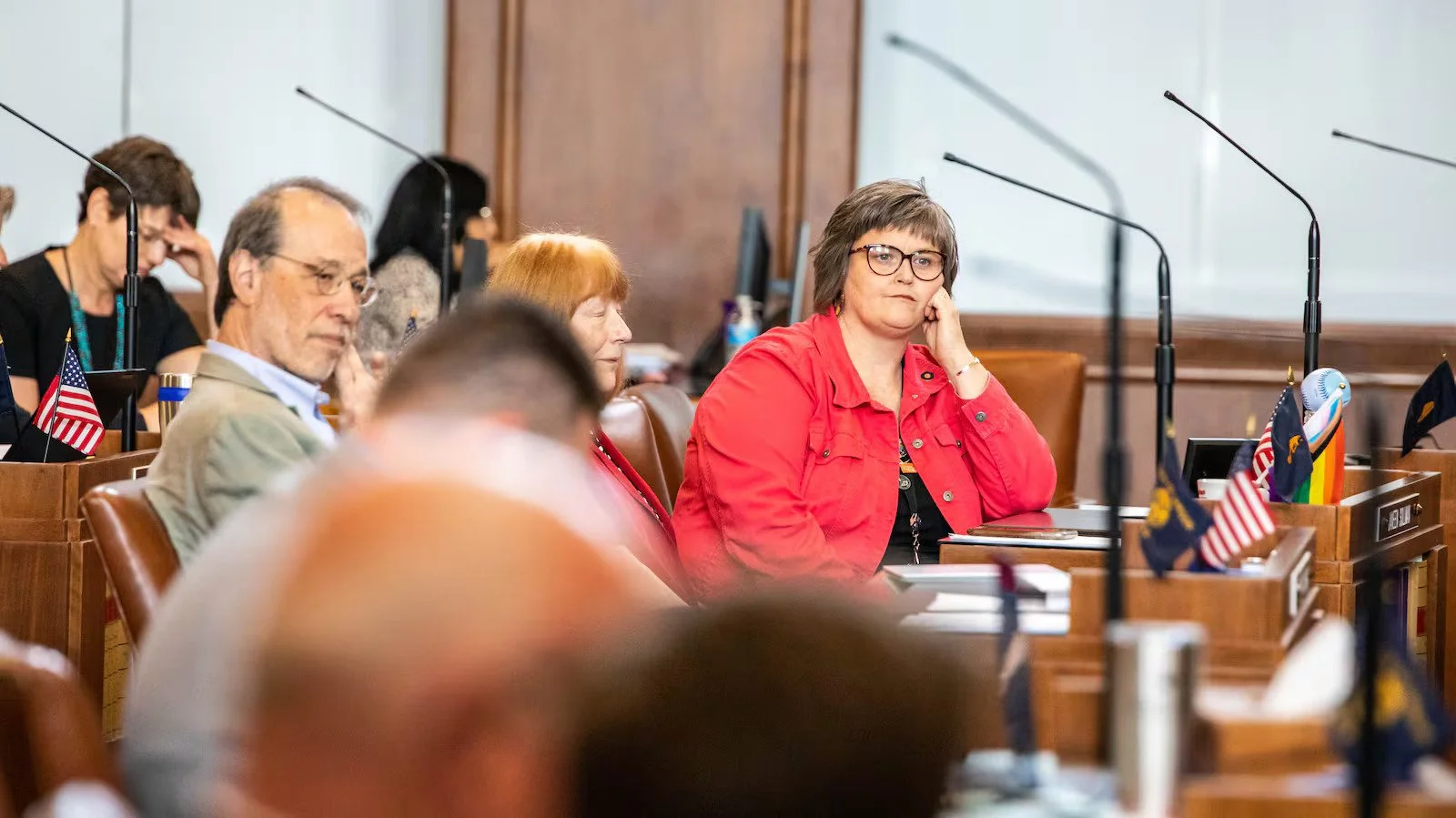
Sen. Janeen Sollman (Blake Benard)

Gov. Tina Kotek (Brian Brose)
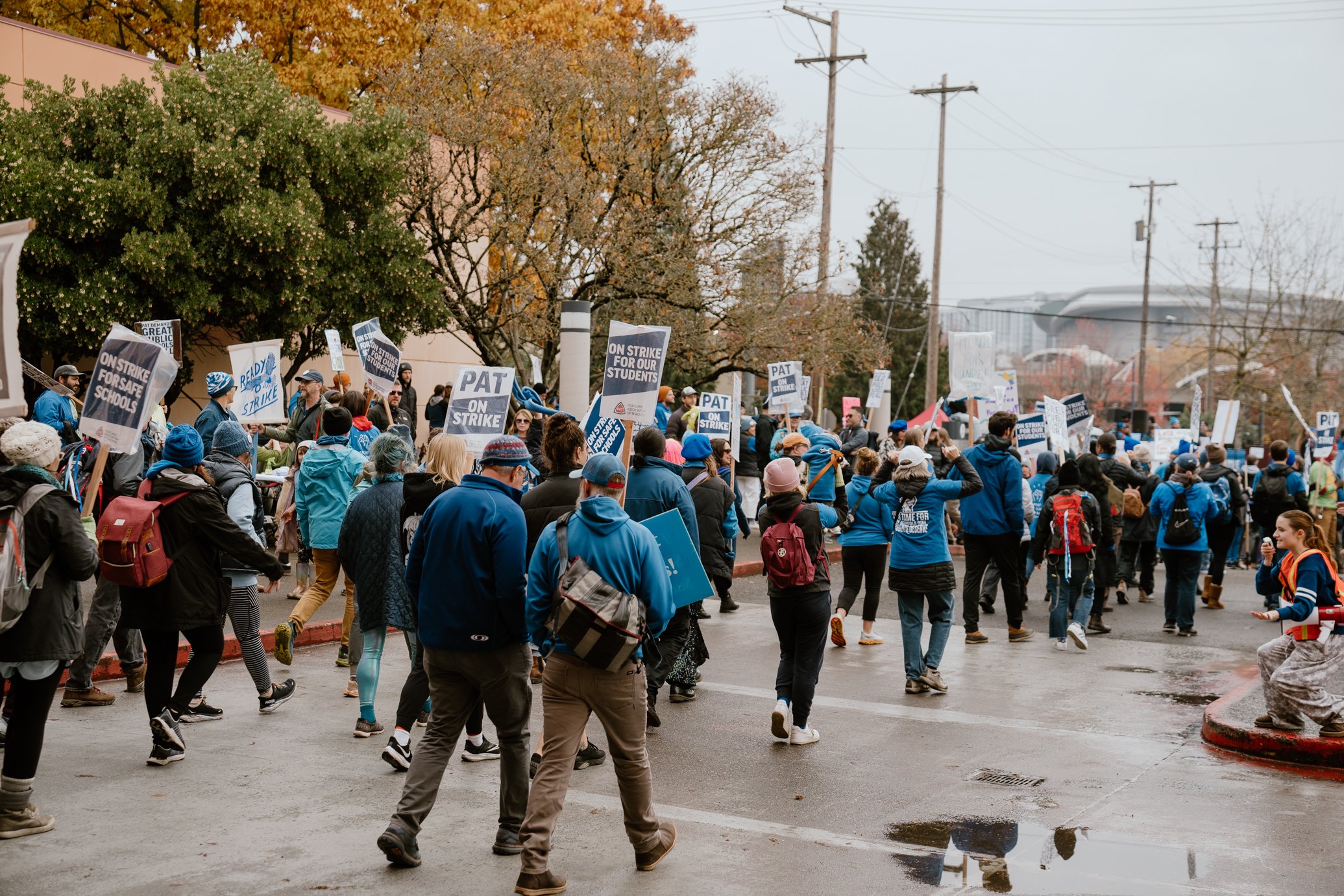
Portland teacher strike, 2023 (Brian Brose)
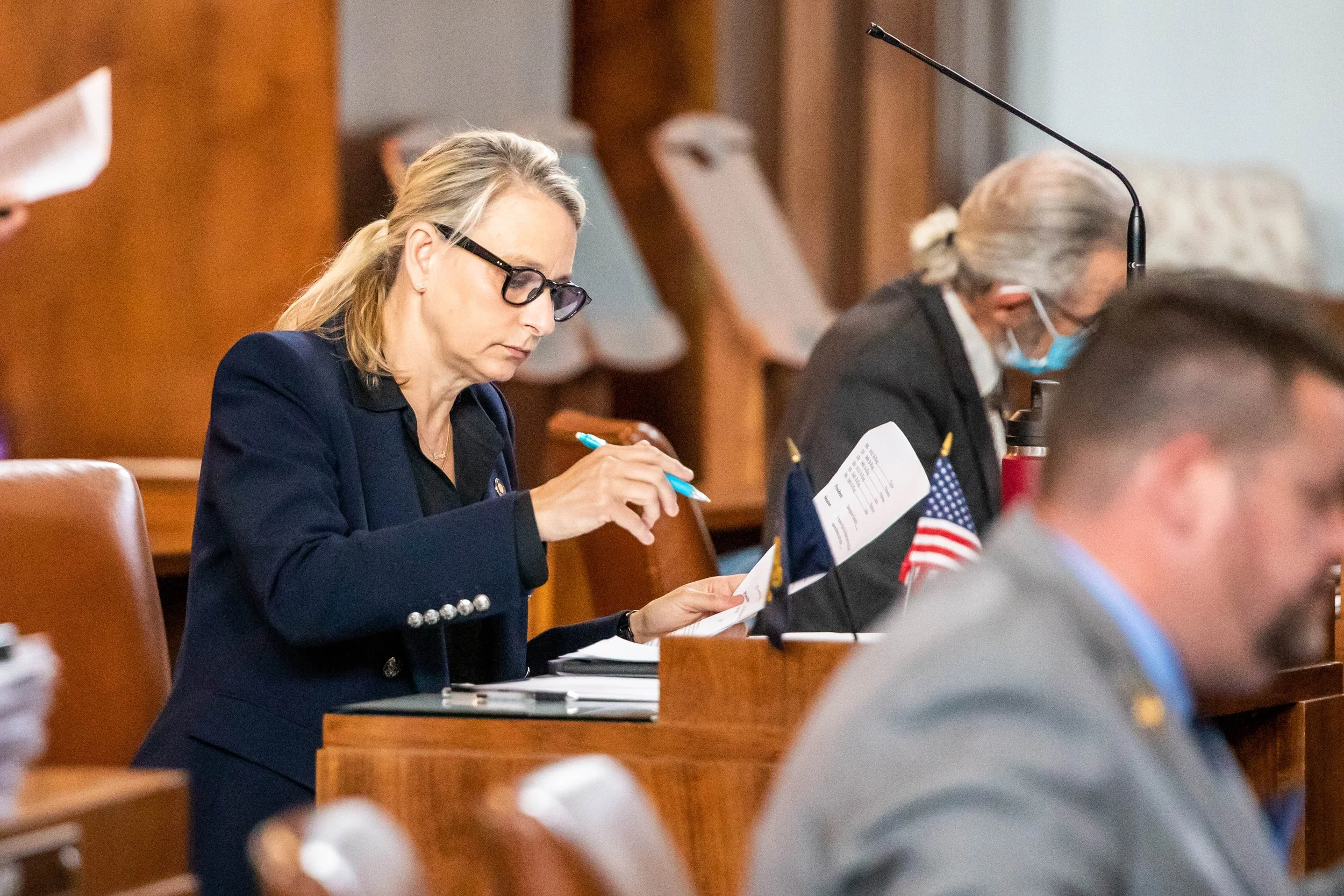
Sen. Kate Lieber (Blake Benard)
Given organized labor’s strength in Oregon—only six states have higher union membership rates, according to federal data—OEA might have been expected to grow even more powerful as Democrats tightened their grip on the state.
Except, that is, for a pivotal 2018 U.S. Supreme Court case, Janus v. AFSCME.
In the Janus decision, the high court ruled that public employee bargaining unit members did not have to pay union dues to get the benefits of union membership. Any bargaining unit member could now opt out of paying dues.
The impact of the Janus decision on OEA has never previously been reported. Internal records viewed by OJP, however, show the number of nondues payers rose from fewer than 3,000 in 2018 to more than 10,000 today (see graph), representing lost dues of about $5 million this year. As a result, documents show, OEA has run a budget deficit every year since 2018, despite raising individual dues twice. (Its 2026 budget is about $30 million.)
“It is a big deal,” OEA’s Nelson acknowledges. “I won’t sugarcoat it.”
To cope with the shortfall, OEA has sold off real estate in Albany and Pendleton and cut staff—although the union still pays its top professionals handsomely. Recent tax filings show that 10 OEA employees recorded compensation of more than $230,000 each in 2024.
Having stagnated post-Janus, OEA’s political action committee, from which it makes campaign contributions, is now midsized by Salem standards. Of course, OEA can still mobilize thousands of members for phone banking, door knocking, or mass communication with recalcitrant lawmakers.
Nelson says OEA has become more aggressive post-Janus. “We are much more engaged with our members now,” she says. “Building power and member voice is key. It’s the only way we’re going to survive, honestly.”
John Logan, a professor of labor and employment studies at San Francisco State University, says unions are finding that new members are less likely to pay dues than existing members. “You really have to engage members and listen to what they want,” Logan says.
Part of what some OEA members—particularly in Portland and Beaverton—have wanted is more focus on issues such as Israel’s war in Gaza.
“Those members feel that [the Palestine issue] is a part of education and that there is a responsibility to talk about things that are about our belief system around democracy and community,” says Nelson, who joined OEA four years ago after serving in senior positions with the teachers unions in Arkansas and Georgia.
OEA’s activism has also taken the form of recent teacher strikes in Portland (2023) and Albany (2024). Both were combative and ended without significant financial gains but allowed the union to demonstrate its might.
“Our teachers were really frustrated before the strike,” says Ryan Mattingly, chairman of the Greater Albany School Board. “But financially they ended up with the pay we offered to begin with.”
Teachers whom OJP spoke to say there’s a high level of workplace dissatisfaction, despite the funding increase from the Student Success Act. They say inflation consumed much of the increase and classrooms are crowded and often unmanageable because of legislation limiting disciplinary action that may be taken against students.
The Portland strike had a hidden consequence. Records show OEA shelled out nearly $6 million in strike pay for the work stoppage, which lasted 25 days.
Following the strike, OEA in 2025 put its weight behind passing Senate Bill 916. The new law allows future striking teachers to collect unemployment benefits after a two-week waiting period, shifting strike costs from the union to taxpayers. No other state allows striking public employees to collect unemployment.
“Striking for us is a last resort, not a first resort,” Nelson insists.
Nonetheless, OEA appears poised to use the new law around the state. In February, the union, which also represents faculty at 10 of Oregon’s 17 community colleges, issued a news release titled “Crisis in our schools: Seven K-12 districts and community colleges on the brink of spring strikes.”
Despite the union’s activism, there are signs its hold is weakening, even among Democrats who have traditionally been loyal supporters.
OEA is one of the most important yet least scrutinized special interests in the state—and the key player when it comes to Oregon students and the single largest line item in the state’s budget.
David Crandall, who has been researching K-12 schools for more than 50 years, agrees that OEA is less dominant than critics may think.
“There was a time when they were very powerful, in my experience,” says Crandall, now part of Oregon Public Education Network, a reform group. “The past few years, they’ve had internal turmoil and have not been as effective.”
In the February session, lawmakers overcame OEA’s objections to a bill that diverted a small slice of education funding to a Coos Bay hospital; rejected the union’s push to tap a rainy day fund to give more money to schools; and again rejected an OEA priority bill that would make class size a mandatory subject of collective bargaining.
Says former state Sen. Ginny Burdick (D-Portland), who served in the Senate from 1997 to 2021, including five years as Senate majority leader: “I don’t think they [OEA] are as strategic as they used to be.”
OEA’s decision to go after Sollman incensed some of her colleagues. “It’s outrageous,” says Meek, the Gladstone senator, who contributed $5,000 to Sollman’s campaign. “I think this union has gotten out over their skis, and I think their bullying is going to backfire.”
“I am really disappointed,” adds Sen. Sara Gelser Blouin (D-Corvallis).
The three most powerful Democrats in the Senate are also standing up for Sollman, even in the face of OEA’s desire to defeat her. Ways and Means co-chair Kate Lieber (D-Portland) gave Sollman $25,000; Senate President Rob Wagner (D-Lake Oswego) gave her $12,500; and Senate Majority Leader Kayse Jama (D-Portland) gave $2,500.
“I worked in the labor movement for over 10 years before serving in the Senate,” Wagner says. “[Sollman] is one of our strongest supporters of public education. My message is this: We’re with her 100%.”
In March, OEA announced it would not endorse Gov. Tina Kotek. At first glance, that decision was puzzling —she got the State School Fund an extra more than $500 million last year, faces no significant primary opposition, and is a favorite to win reelection in November.
Nelson attributes the nonendorsement to lingering anger over a 2019 decision Kotek made as House speaker: She agreed to cut pension benefits to secure votes for the Student Success Act. “We still have people who are smarting from her decision on PERS,” Nelson says.
Last week, Kotek upped the stakes by issuing an executive order forbidding school districts from cutting school days to balance budgets.
“The outcomes in the state are unacceptable,” Kotek told OJP at the time. OEA president Enrique Farrera (OEA’s president is elected by members; Nelson’s is a permanent staff position) knows the alternative to cutting days is cutting teachers, so he fired back: “[Kotek] needs to spend less time listening to CEOs and corporate lobbyists and more time with educators and working families.”
One education reform advocate, also a long-term ally of organized labor, says OEA has lost its way. The union should “support what other states have done that are successful,” says Angela Uherbelau, founder of the group Oregon Kids Read, “because we have nowhere else to fall. We are at the absolute bottom.”
A strong teachers union that advocates aggressively for its members and good educational results does not have to be mutually exclusive. That’s the case in Connecticut, New Jersey and Illinois—and Massachusetts, the state that is always at or near the top of educational achievement.
“There are states where the teachers union is very strong,” says Saultz, the Lewis & Clark dean, “and outcomes are really good.”
CORRECTION: This story originally referred to members of a bargaining unit who do not pay dues as “union members.” In fact, although they enjoy the benefits and protections of the union, they are correctly called “nondues-paying employees.”
READ MORE of our series “Oregon Schools: What Went Wrong”
Oregon Schools: What Went Wrong, Nov. 12, 2025
Schooled by Mississippi, Dec. 8, 2025
Leaving It Up to the Locals Impedes Oregon’s Much-Needed Reading Rescue, Jan. 29, 2026
Oregon’s Education Workforce Climbed While Student Enrollment Slid, Feb. 5, 2026
Unprepared: The Broken Pipeline Teaching Oregon’s Teachers, March 15, 2026
If you are a student, parent, teacher or former teacher, school administrator or policymaker with ideas on how to fix Oregon’s schools, we want to hear from you. Please share your thoughts and how to reach you by clicking on this link.