
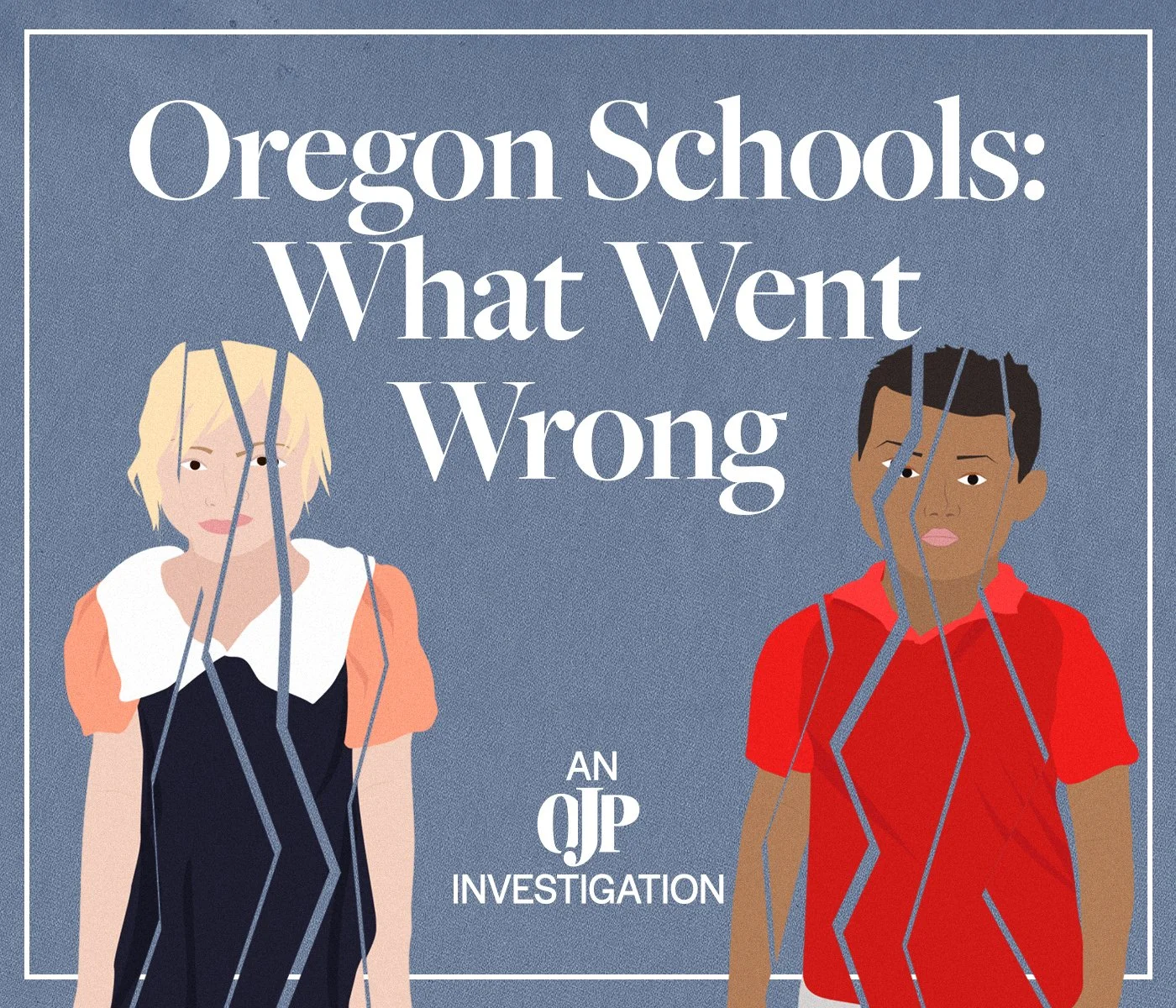
Unprepared: The Broken Pipeline Teaching Oregon’s Teachers
How our education leaders have failed the classroom.

Jim Green, former head of Oregon School Boards Association, urges Gov. Tina Kotek to mandate that all new Oregon teachers first pass a standalone science of reading test in order to be licensed. (Courtesy of Jim Green)
By James Neff
March 15, 2026
Jim Green says one solution for Oregon’s worst-in-the-nation reading scores is a governor’s executive order away.
Green should know. For 25 years, he worked the halls of the Capitol, first as a lobbyist and then as executive director of the Oregon School Boards Association, which represents 1,400 elected members across the state’s 197 school districts. A lawyer, Green also served two terms on the Salem-Keizer School Board.
Now retired, Green has regrets. In particular, he rues some of the victories his group (alongside the teachers union and the Council of School Administrators) achieved over the past two decades. Among them: undercutting state reading assessments by helping pass perhaps the nation’s strongest testing opt-out law and beating back efforts to require phonics-based reading instruction in elementary schools.
“We went too far in saying, ‘Don’t mandate anything,’” Green says.
Today, only 40.3% of Oregon third graders are proficient in reading, as measured by state tests. Green says his group’s success contributed to what he concedes is a statewide disgrace.
The governor could spark a turnaround, Green insists, if she did one thing: issue an executive order that every new Oregon elementary teacher must pass a standalone exam in the science of reading. Nearly 20 states require such a test for teachers, including Colorado, Louisiana, California, and Mississippi—and all of them have higher reading scores than Oregon.
(Oregon currently uses a test for its elementary education license that national experts say is “weak” because it combines reading and social studies in one 90-minute multiple-choice test. You could bomb the reading part, ace social studies, and scoot by with a passing grade.)
Kotek is uniquely empowered to issue such an order. Unlike any other state, Oregon’s superintendent of public instruction is the governor. And when she’s motivated, Kotek can act decisively to make changes in Oregon schools. This past summer, for example, Kotek used her executive powers to ban student cellphones during school hours. She acted after lawmakers failed to pass such a ban.
If a distraction in the pocket warrants an executive order, a failure to correctly teach future teachers deserves nothing less: “She’s just got to say, ‘If you want to be an approved program in the state of Oregon so that your higher-ed students can be licensed [to teach] in the state, this is how it’s going to be.’”
“Gov. Kotek would make her natural constituency at OEA extremely upset” with an executive order, Jim Green says. “But I can tell you this, it would make a huge sea change in educational outcomes for kids for generations to come.”
Literacy advocates and educators acknowledge a rigorous reading test for aspiring elementary teachers would not by itself fix Oregon’s literacy crisis. But it is a critical tool that could reassure the public that teachers have been properly trained to teach children to read.
Kotek told OJP in a statement that she is “open to future requirements from the Teacher Standards and Practices Commission,” but would not commit to an executive order.
An executive order would be a pivotal step in reversing a pattern the Oregon Journalism Project has chronicled in its series “Oregon Schools: What Went Wrong”: the state’s abdication of its responsibility to ensure that every school district and classroom follows best practices when teaching students to read. Allowing students to opt out of tests and districts to shrug off phonics are part of that lax oversight. So is ignoring whether universities adequately train educators to teach reading.
While other states have pivoted to evidence-based instruction, Oregon’s educational gatekeepers—from the governor’s office to the legislature and university deans—have allowed a pipeline of inadequately trained teachers to flow into classrooms, leaving 3 out of 5 of the state’s third graders unable to read proficiently. Now, advocates like Green and others say one way to break this cycle is to bypass the bureaucracy, special interests, and the Legislature and mandate a rigorous, standalone "science of reading" exam for every new teacher in the state.
“The state spends a lot of money at the colleges, and students spend a lot of money going through college,” says Rob Saxton, former director of the Oregon Department of Education and superintendent of the Tigard-Tualatin School District. “Then school districts turn around and spend a lot of money having to retrain recent graduates in the science of reading.”
It’s not the teachers’ fault, he tells OJP. It’s the training.
Read More In This Series:
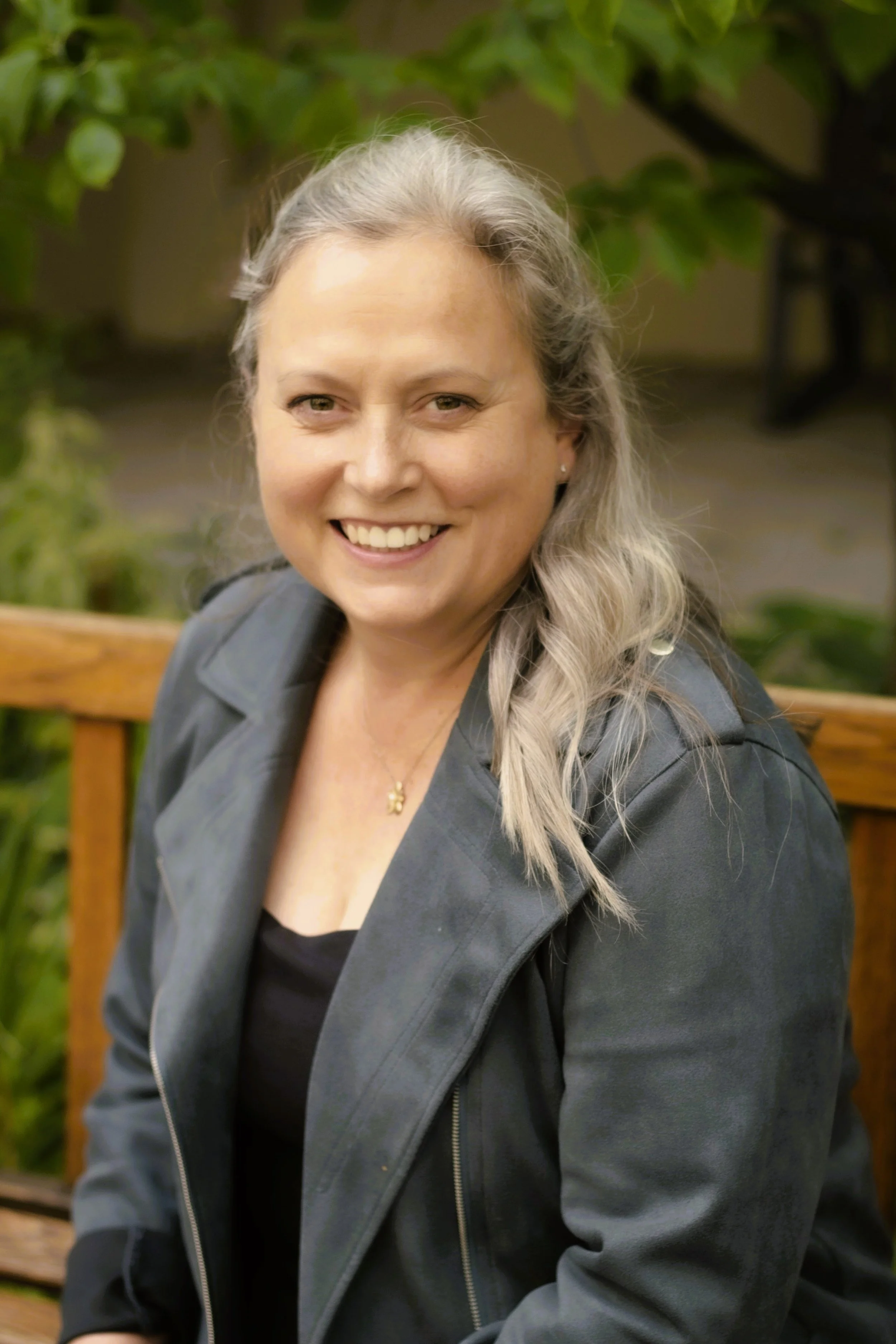
Ronda Fritz, an associate education professor at Eastern Oregon University, transformed its early literacy program into the highest ranked in the state. (Christina Thew)
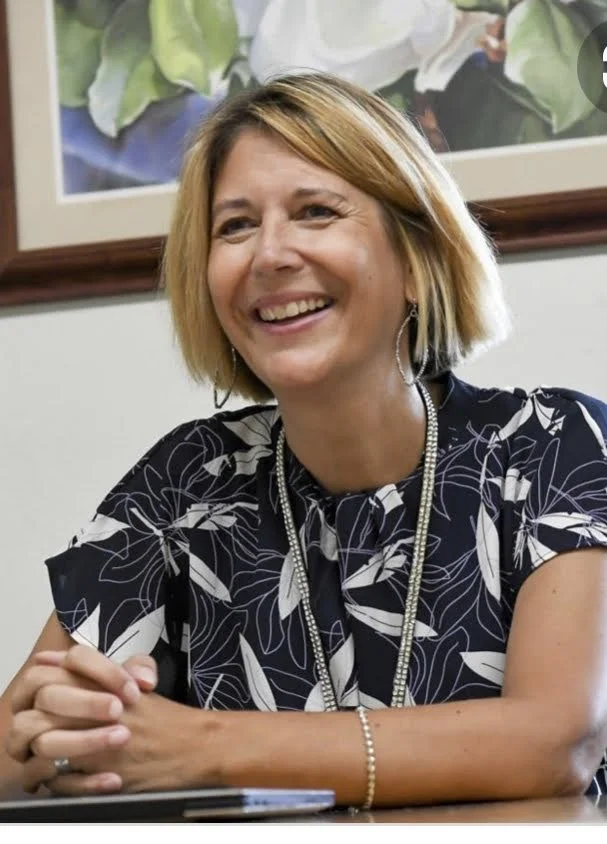
Melissa Goff, former interim director of Oregon's Teacher Standards and Practices Commission, wants education leaders to close the pipeline of underprepared teachers from online colleges. (Courtesy of Melissa Goff)
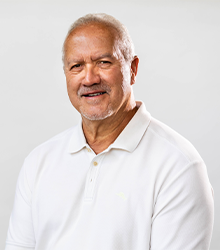
Edward Kame'neui, emeritus professor of education at the University of Oregon, says his university and others have failed to teach aspiring teachers in the scientifically backed methods necessary to teach all kids to read. (Courtesy of University of Oregon)
What went wrong
The results of Oregon’s flawed reading instruction are hard to overlook. Not only have statewide reading scores been slipping for years, but a research and advocacy nonprofit, the National Council on Teacher Quality, released a state-by-state report in 2014 that slammed Oregon’s teacher prep programs. The report called out Oregon schools and universities for failing to effectively educate budding elementary teachers in direct, phonics-based reading instruction, which the National Reading Panel, after synthesizing 40 years of research, concluded was the best method for teaching all children to read.
The 2014 report, endorsed by the top education official in 21 states but not Oregon’s, analyzed syllabuses and instructional materials used to train teachers.
Not one of the Oregon programs evaluated met the five accepted standards for “preparing teacher candidates in effective, scientifically based reading instruction”: phonemic awareness, phonics, fluency, vocabulary and comprehension.
In other words, the teachers graduating from Oregon’s universities most likely could not pass a more rigorous elementary reading exam.
That failure came as no surprise to Edward Kame’enui, a special education professor at the University of Oregon’s College of Education, who has researched and taught science of reading methods for more than 30 years. Kame’enui says he often battled with his general education colleagues, many of whom thought teaching letter sounds, phonics and decoding was only needed for special education students.
“So people in the College of Education interpret their position as, ‘I have academic freedom to promote my expertise, not somebody else’s expertise or what the research shows,’” he says.
‘Why did I go through a teacher preparation program and get a master's degree in reading and never learn any of this?’” Says Ronda Fritz, a professor of education at Eastern Oregon University
In 2020, the National Council on Teacher Quality again reviewed Oregon’s teacher training programs and again found most failing. All of the programs received D’s or F’s, except for Warner Pacific University’s undergrad program, which received an A, and Eastern Oregon University’s grad program, which got a B. (Some Oregon colleges–Western Oregon University, Lewis & Clark College and the University of Portland—wouldn’t participate in the study and so were not graded.)
Oregon’s marks haven’t improved, a finding both the Oregon Capital Chronicle and The Oregonian explored in 2023.
In the 2023 report card, the most recent, all of the state teacher training programs earned F’s, except for Oregon State University’s undergraduate program, which was given a C, and Eastern Oregon, a bright spot, which received an A for its undergraduate program. (None of Oregon’s private education programs, including Warner Pacific, shared course materials with the National Council on Teacher Quality. Ron Noble, chief of teacher preparation for the council, said Oregon is one of the more uncooperative states his group assesses. Some states have 100% participation.)
The fact that one public university in Oregon is turning out highly trained elementary reading teachers is largely due to the dogged work of Ronda Fritz.
Fritz is a former elementary school teacher who got her education degree in 1992 at Boise State University, where professors trained education majors in “whole language,” a then-popular but since discredited method to teach reading by having students guess the meaning of words by looking at nearby pictures rather than sounding out letters. After years teaching in Union County’s tiny North Powder School District, she almost quit the profession in 2000, blaming herself when many of her students weren’t learning to read.
A turning point came after a teacher said Fritz’s son, who struggled to read, might be dyslexic. Based on her professional training, Fritz didn’t believe it.
Then, in 2003, she attended a teacher training session put on by the International Dyslexia Association and learned about the science of reading. “By the time that was over, to be honest, I was in tears,” Fritz says. The training showed her why her son and some students in her classes hadn’t learned to read.
Then her grief took a turn. “It was a lot of anger, like, ‘Why did I go through a teacher preparation program and get a master's degree in reading and never learn any of this?’”
Imbued with purpose, Fritz earned a doctorate in education, landed a position at Eastern Oregon, and gradually revamped the education college’s reading courses.
Online teacher programs surge
While Fritz has successfully overhauled the curriculum for new teachers at Oregon’s smallest public university, literacy advocates point to a huge unaddressed problem elsewhere: the growing ranks of teachers in Oregon who get their education degrees at less intensive online colleges such as Arizona’s Grand Canyon University, with more than 100,000 online students, and Utah-based Western Governors University, which has 37,000 students in its education school alone.
In 2023, nearly half of newly licensed Oregon teachers—729 out of 1,518—earned their degrees from out-of-state universities, according to data obtained by OJP from the Oregon Longitudinal Data Collaborative (see graph).
Most of those 729 new teachers completed their programs at Grand Canyon or Western Governors, says Kevin Carr, a Pacific University education professor who has studied the issue. The schools are less expensive than brick-and-mortar universities, he explains.
The rapid growth of Oregon teachers trained at online schools is a development that the Oregon Legislature’s top education leader was unaware of. “I had no idea,” said state Sen. Lew Frederick (D-Portland), who chairs the Senate Committee on Education.
Graduates of online schools may be contributing to Oregon’s literacy crisis. In 2023, the National Council on Teacher Quality gave Western Governors an F grade in “reading foundations.” And Grand Canyon’s reading courses received no grade because it did not provide course materials for the council to analyze. This means perhaps up to half of Oregon's new teachers were trained by online institutions that have either failed a national reading instruction standard or been unwilling to cooperate with such an assessment.
In 2023, the U.S. Department of Education fined Grand Canyon $37.7 million for misrepresenting its costs to 7,500 students. (The Trump administration later revoked the record fine.)
Western Governors didn’t reply to OJP’s requests for comment. GCU said in an email “our licensure programs are fully approved by the Arizona Department of Education which includes training on the Science of Reading.”
OJP asked the Oregon Teacher Standards and Practices Commission how many teachers currently working in Oregon earned degrees from online schools, but the agency says it doesn’t track that information. The reason: “It wasn’t a priority [when] the current database…was developed 11 years ago.”
Rachel Alpert, TSPC’s executive director, who makes $184,392 a year to run the 26-employee agency, declined several interview requests for this story. The mission of the agency is “to ensure Oregon schools have access to well-trained, effective and accountable education professionals.”
Alpert’s predecessor at the commission, however, was willing to talk.
“We need to shut down this pipeline to Grand Canyon and Western Governors,” Melissa Goff, TSPC’s former interim executive director, tells OJP. She also believes teachers with online degrees disproportionately end up in some of the state’s least affluent school districts.
“There needs to be a solution to turn that spigot off,” Goff says, “and provide Oregonians opportunities to stay in rural communities” and access a teacher prep program “where they live.”
OJP reached out to both the Oregon Education Association and the Council of School Administrators to ask whether they supported a science of reading test before a teacher may be licensed. Neither organization responded. When OJP asked the Oregon School Boards Association about such a test, a spokesman said the agency would not answer a hypothetical question.
The rapid growth of Oregon teachers trained at online schools is a development that the Oregon Legislature’s top education leader was unaware of. “I had no idea,” said state Sen. Lew Frederick (D-Portland), who chairs the Senate Committee on Education.
Retooling the prep schools
To be fair, Oregon has made some effort to improve teacher training. In 2023, Gov. Kotek unveiled an Early Literacy Initiative. She also created the Early Literacy Educator Preparation Council, which recommended precisely how Oregon universities should retool their teacher training to address the science of reading. The recommendations were not mandates, however.
The deadline for realigning the programs is fall 2026. OJP spoke to college of education deans at three of the state’s largest teacher prep programs, Portland State University, Lewis & Clark College and George Fox University. All said their programs are on track to meet the fall deadline.
Shawn Daley, the George Fox dean, acknowledges that his program historically taught the now-discredited “balanced literacy” approach. He says, however, that George Fox’s curriculum over the past decade “has steadily shifted toward a science of reading framework.”
But Daley opposes a mandated science of reading exam. “I don’t believe the situation requires the governor to use her executive authority in that way,” he says. Daley would rather that Kotek require out-of-state and online colleges to demonstrate they prepare students in the science of reading.
Heading for a likely failure?
Jim Green realizes his call for Kotek to mandate a science of reading licensing test may fail for at least one big reason: It would almost certainly provoke resistance from the teachers union, which has 40,000-plus members.
“Gov. Kotek would make her natural constituency at OEA extremely upset” with an executive order, Green says. “But I can tell you this, it would make a huge sea change in educational outcomes for kids for generations to come.”
Green jokes that he probably won’t be having coffee anymore with his friends in “the alphabets,” as people refer to the Capitol’s three large educational lobby groups–OEA, OSBA and COSA. But no matter. He’ll have more time for flyfishing and his two grandchildren.
“I've become a grandparent,” he says, “and I don't want my grandkids to be stuck in that system.”
Why are Oregon’s schools failing? Who is responsible for the failures? And, most importantly, how do we dig ourselves out of this? If you are a student, parent, taxpayer, teacher or former teacher, school administrator or policymaker with ideas on how to answer these questions, we want to hear from you. Please share your thoughts and how to reach you by clicking on this link.