
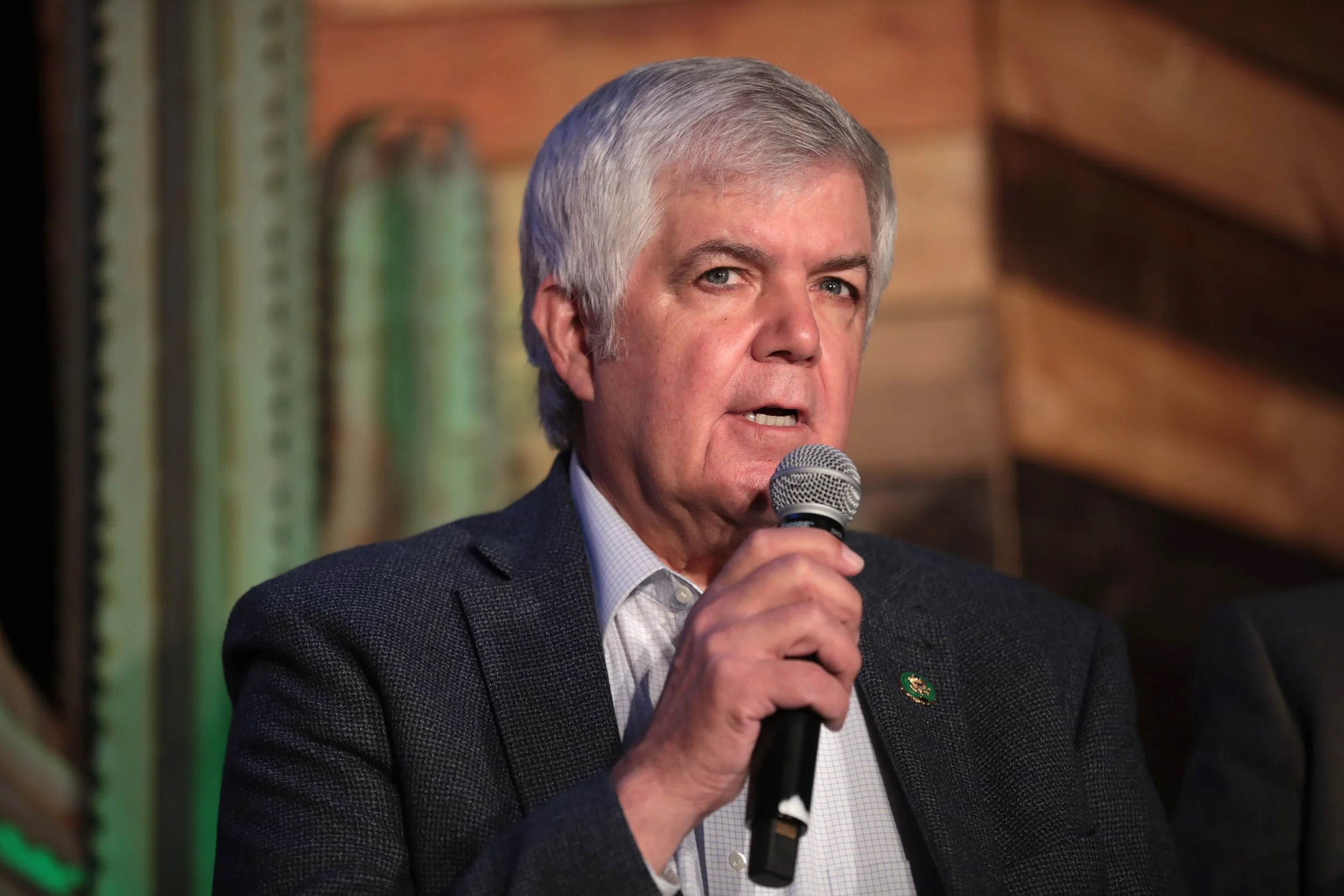
U.S. Rep. Cliff Bentz (R-Ore.) is a member of a House committee investigating what it calls "radical" environmental groups that recoup legal fees when they sue the federal government. (Wikimedia Commons)

Congressional Republicans Target Oregon Environmentalists
The House Committee on Natural Resources criticizes Oregon Wild and Cascadia Wildlands for their ‘lawfare.’
By Penny Rosenberg
A U.S. House committee has called out two Oregon-based environmental nonprofits for weaponizing litigation and profiting from lawsuits that challenge federal projects.
Oregon Wild of Portland and Eugene-based Cascadia Wildlands are among 19 “radical” groups nationwide, according to the House Committee on Natural Resources, that use “unscrupulous tactics to profit from taxpayer dollars.”
The committee has demanded that the organizations send representatives to Washington to testify at an “in-person transcribed interview.”
Oregon’s 2nd District Congressman Cliff Bentz, a member of the committee, believes the litigation that stalled implementation of a restoration project in the Mt. Hood National Forest—the site of one of the state’s wildfires this summer—is a prime example.
A small portion of the national forest, 5,280 acres, was slated for a project approved in 2023 that would’ve hardened the area to wildfire, but implementation was delayed: first after Oregon Wild sued to protect northern spotted owl habitat, and then after President Donald Trump eliminated 16% of the U.S. Forest Service’s staff.
As a result, the commercial aspect of the Grasshopper Restoration Project, which would have hired loggers to clear marketable timber, never happened.
While he doesn’t speak for the entire committee, Bentz said through a spokesperson, the goal of his committee’s investigation is to prevent abuses of the law by changing it, if necessary. He called the investigation the “first step in a long process.”
The letter to the environmental groups, sent Sept. 4, was signed by 17 of the House committee’s 25 Republican members. None of the Democratic members, including Val Hoyle of Oregon’s 4th District and Maxine Dexter of Oregon’s 3rd, signed on.
Representatives from Oregon Wild and Cascadia Wildlands declined to address the committee’s characterizations.
“On the advice of counsel, we do not have any comment on the Republican letter, nor are we participating in any interviews on it at this time,” Arran Robertson, communications director for Oregon Wild, said by email.
The letter sent to Oregon Wild and the other environmental groups criticizes them for bringing lawsuits under the Endangered Species, Equal Access to Justice and National Environmental Policy acts, all of which allow plaintiffs to collect attorney fees if they prevail.
“These fee-shifting provisions currently permit Oregon Wild and similar organizations to effectively function as law firms funded by taxpayer dollars, employing a simple but lucrative profit model: sue to block federal actions in friendly courts, collect taxpayer-funded attorney’s fees and costs whenever prevailing or able to settle in court, and fundraise on the back of courtroom victories,” said the House committee letter sent to Oregon Wild.
In the Grasshopper project litigation, the feds paid $55,000 to cover Oregon Wild’s attorney fees after the two sides reached a settlement in January 2025.
According to Oregon Wild’s financial reports, litigation proceeds are a small portion of the nonprofit’s revenue. Of the $2.1 million awarded to the organization in 2025, only $68,000 is grouped under “miscellaneous,” which could constitute attorney fees.
A review of lawsuits filed shows that despite Oregon Wild’s reputation as lawsuit happy, other Oregon environmental nonprofits sue the federal government more often. According to the Free Law Project’s CourtListener database, a nonprofit that catalogs federal cases going back centuries, Cascadia Wildlands, Columbia Riverkeeper, Northwest Environmental Defense Center and the Western Environmental Law Center all have more case mentions. The dataset isn’t a perfect measure of lawsuits filed since it also includes friend-of-the-court briefs and docket entries, but it does give a sense of the scale of organizations’ legal actions.
For committee member Rep. Hoyle, the congressional investigation is an infringement of environmentalists’ free speech rights. They’re being targeted for having a different viewpoint, she said.
In his second term, Trump’s executive orders and rule changes have repealed regulations on greenhouse gas emissions by power plants, argued that the incidental killing of endangered species is not necessarily a violation of the Endangered Species Act, walked back fuel economy standards, and reduced clean energy incentives.
Rep. Dexter could not be reached for comment.